Singing Bowls for Beginners: Size, Material and How to Play One
26 November 2026 · Thingstoall · 3 min read

A singing bowl is a simple object: a bowl that rings when you strike it and hums when you run a stick round its rim. Most people who try one for the first time get a rattle rather than a hum, and decide they are doing it wrong. Usually it is just speed and pressure, and it takes about ten minutes to get the hang of.
Brass or aluminium
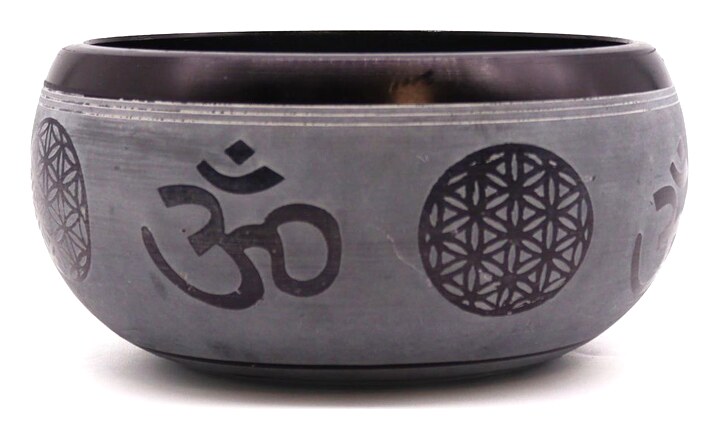
Brass is the traditional material. A brass bowl is heavier, and the note tends to be richer and to last longer. Our compass, FOCUS and celestial bowls are hand-made in India from solid brass, 15cm across, finished in black with gold-coloured designs.
Aluminium is lighter, so the bowl is easy to carry from room to room. Our 16cm Earth Powder bowls, such as the Om Five Buddha and the Mandala Buddha, are hand-finished aluminium with a decorated surface, 8.5cm high. They give a clear, ringing tone and are a good choice if the bowl will be as much a decorative piece as an instrument.
Which size to start with
Mini (6 by 8cm). The black, green and red mini sets include a cushion and a wooden stick, so nothing else is needed. A small bowl has a higher, brighter note and fits on a desk.
Medium (15 to 16cm). A better size for a first bowl you intend to play often. The rim is long enough to keep a steady hum going, and the note is lower and fuller.
How to play it
Striking. Rest the bowl on its cushion or on your flat palm. Do not grip the sides, as your fingers will stop the sound. Tap the outside of the rim gently with the stick, then let it ring.
Circling the rim.
- Tap the bowl once to start it vibrating.
- Hold the stick upright like a pen, and press the wooden side of it against the outside of the rim.
- Move it round the rim slowly and evenly, keeping steady pressure. Move your whole arm, not just your wrist.
- After one or two circuits the hum should build. If the bowl starts to rattle, slow down and press a little less.
Each bowl behaves slightly differently, especially hand-made ones. Spend a few minutes finding the speed yours likes.
Where to keep it
On its cushion or a folded cloth, somewhere it will not be knocked: a shelf, a windowsill or a low table. A bowl left out is played far more often than one kept in a cupboard.
Looking after it
Wipe brass and aluminium bowls with a soft dry cloth. Avoid abrasive cleaners, which will damage the black finish and the gold designs. Keep them dry, and handle them by the base rather than the rim.